

Hard Education | Raising a Child While Raising Students’ Standards
For teachers who are parents


Welcome back to Hard Education!
The series exploring the tough issues that often get overlooked, remain in mainstream newsletters archives or don’t reach headlines at all.
If you missed part 4, click below:
Teaching is such a rewarding and challenging profession when in the school environment.
It doesn’t end as the students leave or the weekends and holidays arrive. There are teachers who when they walk through the school doors and upon arriving home, don’t have an opportunity to unwind, their role continues as the person on demand - they are the parent.
These are the teacher parents.
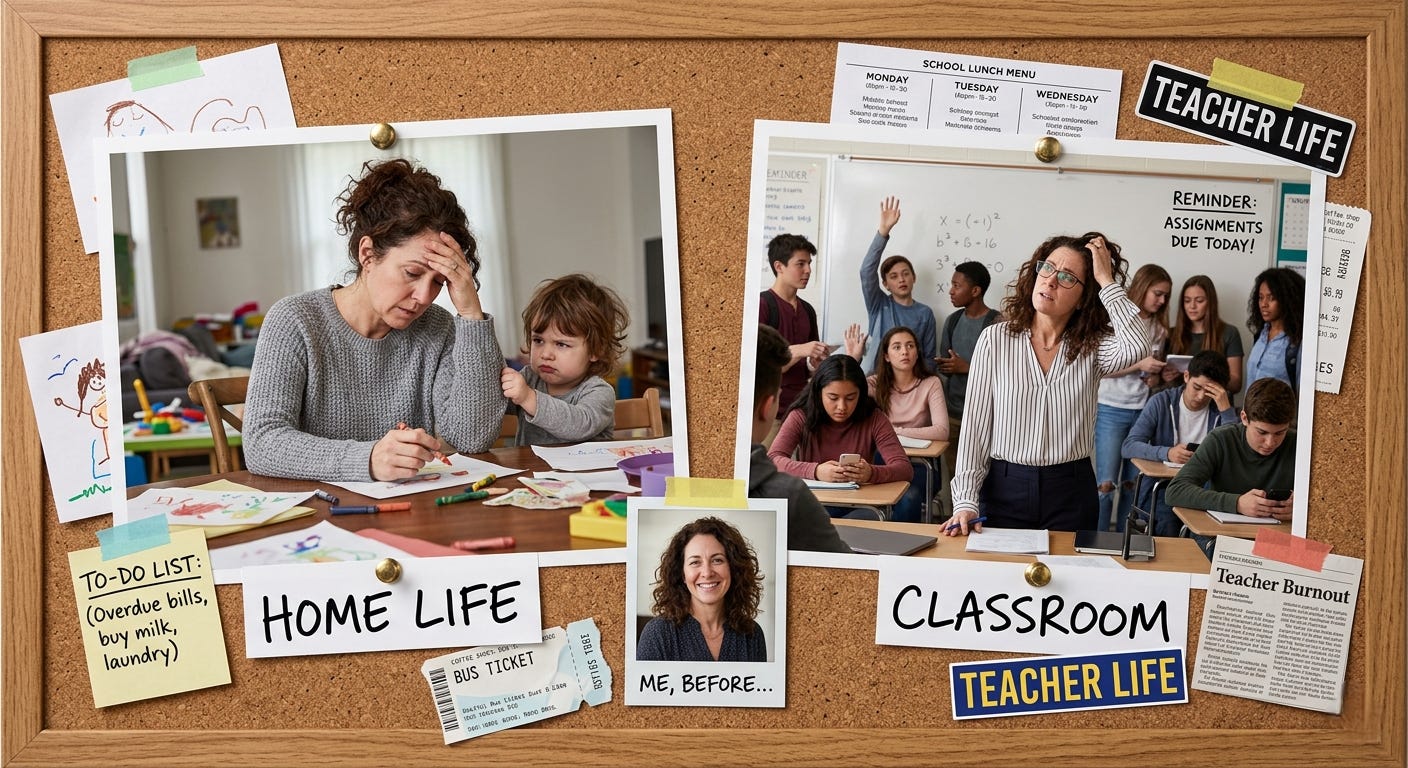
This post is about educators who are also parents and that unspoken pressure that can form between raising children as well as students’ standards.
Today I’m joined by my friend Rico who teaches in a secondary school who will be sharing his experiences.
Let’s unpack this together!
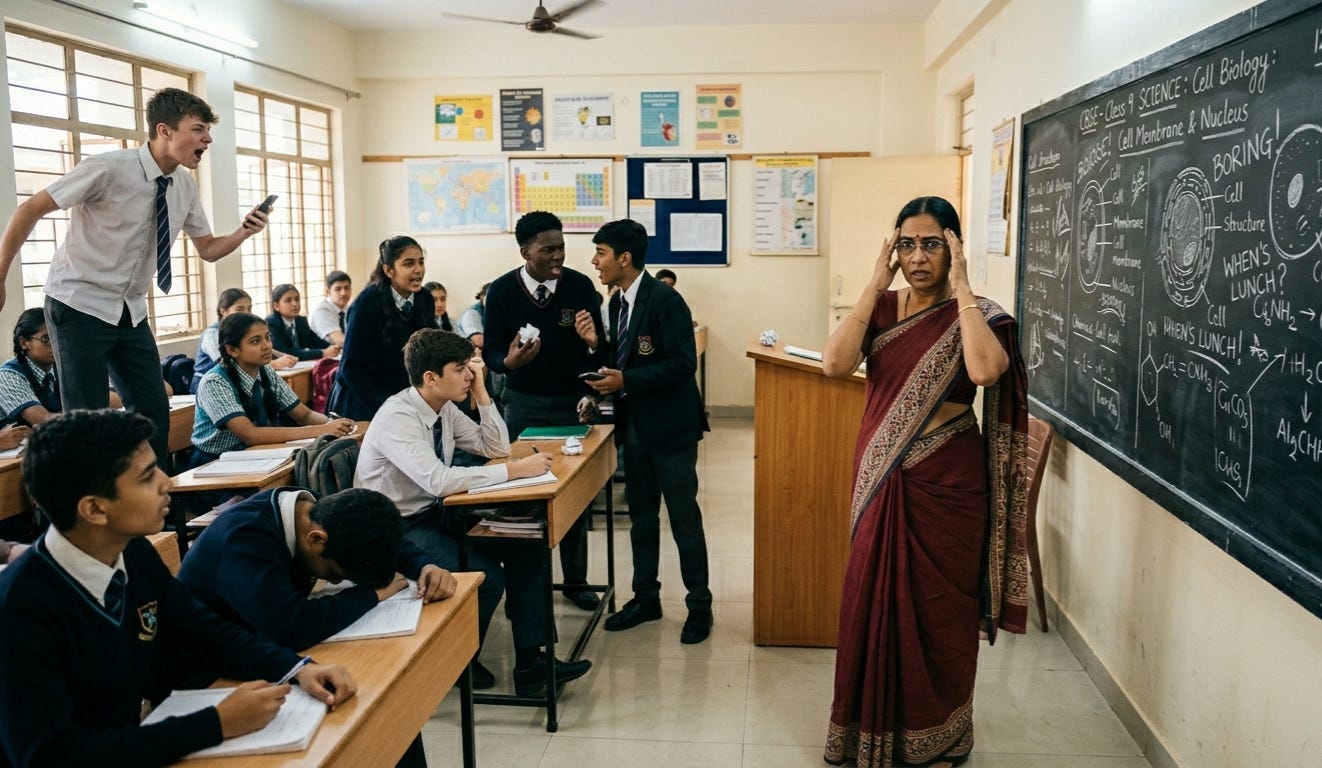
Raising Students’ Standards
In UK schools, classes typically contain around 30 students with a wide range of attainment levels, needs, strengths, and challenges.
Teachers are responsible for supporting all learners by adapting their planning, resources, and teaching methods. Since student progress is largely assessed by teachers before formal exams, differences in teachers’ interpretations of attainment levels can lead to inconsistent expectations.
This can explain why some students perform differently in exams than predicted. Ultimately, both teaching and learning involve judgement from humans, and neither teachers nor students are perfect.
With that said, there is a lot of pressure on teachers to get their students to the highest possible levels.
This can be very stressful for teachers and sometimes this is faced with lack of support.
The interpretation of parents’ teaching abilities
Without a doubt parenting is a learning experience, each stage brings new lessons to learn and being a teacher doesn’t equate to being a know-it-all parent.
There are stark differences in being a teacher and being a parent.
No parenting guide can provide all the answers, and many parents feel overwhelmed by expectations.
As children start school, parents are often judged through their child’s behaviour, attitude, and performance. However, assuming a child’s school experience is solely a reflection of their parenting can be problematic.
The profession of a teacher mixed with parenting can be a stage where an educator feels depleted of energy, at times guilt for spending more time with other people’s children…
On top of this, there is a huge pressure to raise the most intelligent, respectful humans as if being a teacher means being able to work magic.

Society seems to expect children to be just like their parents and schools are no exception…
This expectation seems bizarre to me, I wonder if people who think like this have actually met kids?
Children are all different regardless of their parents’ jobs. Siblings with the same parents have their own personalities so why do we assume children will be clones of their parents?
Not every policeman is going to have law abiding kids, not every doctor is going to have kids that can prescribe medication to patients and not every teacher is going to have a child that gets top grades in all subjects.
The balance of raising students’ standards whilst ensuring our own children make progress is a scale that will always weigh more on one of the sides.
Teaching full time in a school does not provide enough opportunity for a person to really have a work-life balance let alone when children are apart of it.
Rico’s experience
Teaching is still one of the most challenging professions I know.
Ironically, the actual teaching isn’t the part most of us complain about. Delivering lessons, working with young people, building relationships, helping students grow - that’s the bit I genuinely love. If all I had to do was teach, I’d probably have a lot more hair and a lot less greys.
As a father of two, what I find challenging is the relentless nature of the job. People often tell teachers how lucky we are to have so many holidays, but the reality looks a little different from the outside.
Most days I’m working 10–11 hours minimum, with around six and a half hours of direct contact time with young people and colleges. In a single day, I can be an administrator, Head of Year, counsellor, mediator, examiner, detective, mentor, confidant, advisor, data analyst and occasional magician. Somewhere in between all of that, I’m also expected to teach a few lessons.
What genuinely bothers me sometimes is the realisation that I spend more waking hours with other people’s children than I do with my own.
That isn’t a complaint. It’s just a fact.
By the time I get home, my emotional battery is usually flashing red. If I’m honest, all I want to do is find a quiet corner of the house and stare into the distance for twenty minutes. But what kind of father would I be if I stopped there?
So the second shift begins.
Dinner prep. Homework support. Reading stories. Listening to every detail about who said what at school. Settling disagreements. Answering impossible questions. Finding missing uniform. Being Dad.
And those moments matter far more than any spreadsheet, report or meeting ever will.
What people don’t always see is that the work rarely stops at the school gates. Evenings, weekends, holidays and deadline periods often come with their own workload. Reports, planning, data analysis, safeguarding concerns, parental communication and countless other responsibilities quietly follow you home.
The funny thing is, despite all of this, I genuinely love what I do.
I love helping young people navigate some of the most important years of their lives. I love seeing students succeed. I love being the person some children need on the days when things aren’t going so well.
What I do know, however, is that the current pace isn’t always sustainable. Eventually, something pays the price — your energy, your wellbeing, your family time, or all three.
In an ideal world, I’d spend more time with my own children. I’d be present for more of the little moments that disappear far too quickly. But like most parents, I’m trying to balance providing for my family whilst actually being present with them. Some days I manage it well. Other days it feels like a juggling act performed on a tightrope.
Thankfully, I have a partner who does far more than her fair share. I honestly don’t know how she does it. She’s also in education, which means between us we probably have enough stories to write a sitcom, a drama series and a crime documentary.
As a pastoral leader, I often see the side of education that people don’t talk about. The worries. The crises. The difficult conversations. The unseen battles many young people face every day.
Most of that work will never appear in exam results or performance tables. Nobody applauds it. Nobody sees it.
But it’s often the graft behind the scenes that allows students to walk through the gates each morning ready to learn.
And whilst it can be exhausting, it’s also one of the reasons I keep turning up every day.
Rico’s story is one of many, there are many teacher parents who have similar experiences.
I no longer work in a school environment, I teach adults online based around my parenting, writing and lifestyle. However, I will never forget the demands of the job in a school and as a parent, I have even more respect for those who are trying to balance the scales.
We’d like to hear from you:
What can a parent teacher do to prevent burnout when raising standards of students and raising their children?
As a teacher parent you need to give yourself grace.
You are the mind that is sharing knowledge and skills with others while also sharing your heart, energy, time, love and more - be proud of yourself!
Here are some suggestions to help you:
For you:
🎊Schedule time to celebrate yourself - do things that can destress and nourish you e.g. meditation, yoga, swimming, singing, get a massage etc. 🎊
Choose a day each week where you leave work on time regardless of how much work you have left to do. Before you return home to your parental duties, if possible, do something for yourself. It may be walking in nature, sitting and having a coffee, going to the gym, whatever works for you.
At work:
Remember it takes more than one person to help students, seek support where needed, don’t try to do it all alone.
If you know some students are not at their expected levels, ask for an additional adult to assist you in class to support them e.g. a teaching assistant who can help scaffold certain topics.
Involve the parents of those students too. Suggest helpful resources, remember not all parents know the technical words and methods taught in schools. This can make a difference in how your students progress.
At home
Choose an appropriate time to help your children with their school work, remember to breathe before giving into any frustration.
If the subject your child is studying is out of your scope, study it with them e.g. if you have a teenager learning German and you don’t speak it, do some free lessons together using a language app. If it is feasible, look into getting them an online tutor.
🎉If no one has told you, well done for all you do for your students and your child(ren).🎉
To your success,
𝓒 𝓢𝓲𝓶𝓸𝓷𝓮 ✨& Rico
Related Posts
Free:
Are Influencers Shifting Teaching Standards?
Educational Platforms Aren’t Dating Sites Nor Adult Entertainment
The Funny Moments Presented By Students
Teaching Languages Without Linguistics Fails Learners part 1
Teaching Languages Without Linguistics Fails Learners part 2
Paid:
Essential Tips for Helping Students Learn a Foreign Language
Preparing Children for Cultural Bias Without Stealing Their Joy
My Experiences of Teaching Foreign Languages
When Language Teaching Goes Wrong 🎧
Little Voice, Big Languages: Enhancing in Language Learning & Teaching Children 🎧
Check out Rico’s posts:
The Chapters of Creativity After Loss - part 1
The Chapters of Creativity After Loss part 2
The Chapters of Grief and Parenting part 1
The Chapters of Grief and Parenting part 2
Arsenal’s Red Streets, Black Roots - Latest post
 | A guest post by
|
Excellent post! Well done to you both! ❤️
I have so much respect for teachers in general, but teachers who also have children of their own? I honestly don’t know how you do it. I think people forget how much emotional energy teaching takes. It’s not just standing in front of a classroom and teaching a lesson. It’s caring, guiding, listening, managing, encouraging, supporting, and sometimes carrying things home with you that no one else even sees. And then you get home and still have your own children who need you too. That's a lot.
This really made me think about that balance, and honestly, I just want to say thank you to every teacher-parent doing their best every day. You deserve so much more support, rest, and appreciation than you probably get.