
How to Live Abroad Without Fluency 1/2
Tips from a fellow expat in Spain

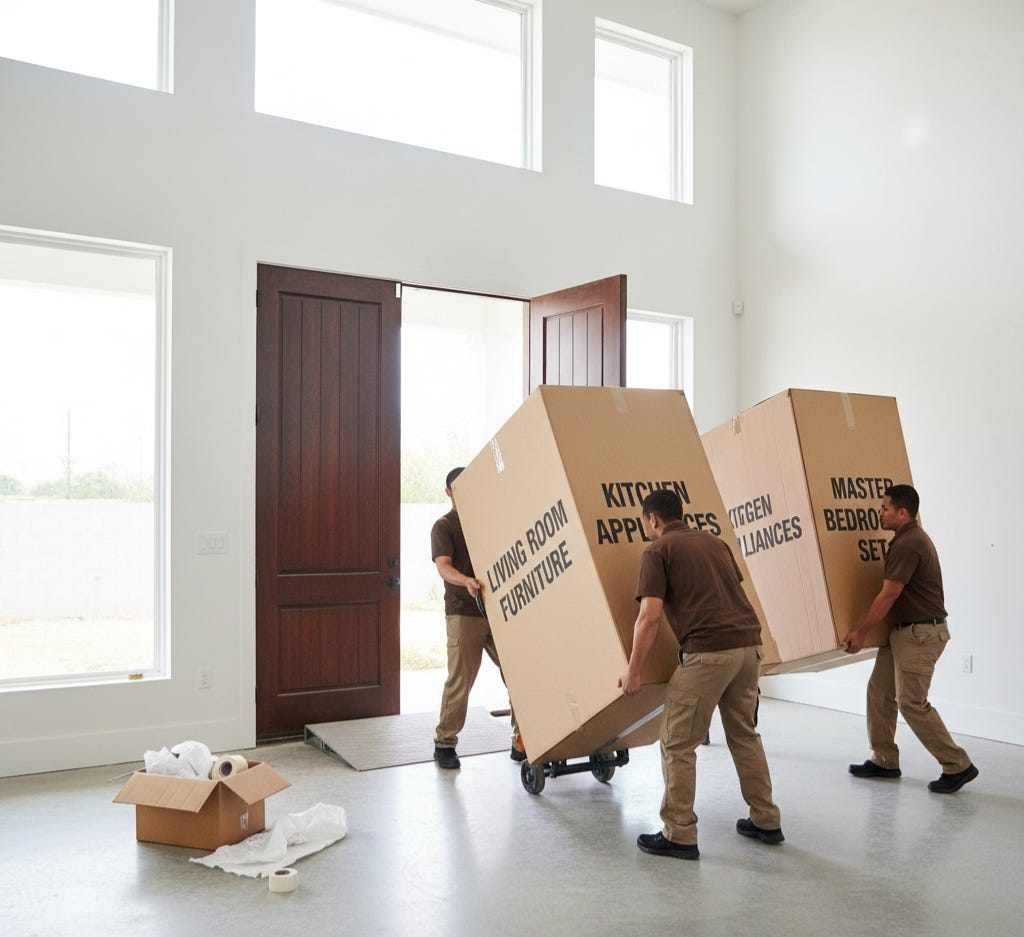
Boxes, lots of them, random workers delivering your unpacked goods to your new home. You’re feeling tired, excited and quite frankly can’t wait until they leave…
You look around and there’s dust everywhere…
When was this home last cleaned?
Random letters addressed to the previous owners…
It’s going to be a long day!
Day? Not even weeks, I’ll be real with you, it takes at least a year to settle in a foreign country and make a place feel like home…
But rest assured, sip a coffee and let’s unpack the boxes together, I’m here to help you along the way!
📦 Box A - Shift your mindset on language levels
Sip your coffee, while I spill some tea… 🍵💬
What I’m about to tell you is very different to those online adverts of ‘Become fluent in 3 months’ or videos of ‘How I learnt a language to a proficient level in 6 months’
Let’s talk about this.
It doesn’t matter which level you are at, even if you are a complete beginner.
It doesn’t matter if you have a positively determined mindset such as; ‘I will be fluent in less than year.’
It doesn’t matter if you have been riding on the negative side such as; ‘I’m no good at this language.’
The influencers, marketing strategists and that language course that promises ‘You’ll be fluent in x months’ are selling you lies.
Language fluency is not a mathematical sum.
Being at a high level of a foreign language + living in that foreign country = automatic fluency
Being at a beginner’s level + living in that foreign country = being no good
It’s all nonsense!
Language fluency is immeasurable. It’s a dynamic combination involving many complex interrelated skills.
This is a new journey for you, where you will embark new experiences and learning or progressing in a foreign language is not quick math.

I see learning a language quite like a dance; it includes making mistakes, enhancing steps, sometimes involving a partner or group, other times solo practice or improvised movement, listening to music, connecting patterns, internalizing memorization, real time processing speed and more...
A trained ballet dancer may find it challenging to street dance but can do it (shout out to the movie, Save the Last Dance) and this is like you. You have learnt your mother tongue, a different style of dance and now you need to adapt to dance to a different rhythm.
With this in mind, how long it takes to get fluent is a very individual thing, it doesn’t even matter about the length of time, it matters that you show up ready to learn.
So shift your mindset to, ‘This is a new stage, I’m here to learn regardless of how long that takes.’
Tea spilled, I’m going to clean it up and grab a coffee. If you’d like to treat me to one, I’d really appreciate that!
We hear the sound of the tape as we rip open another box…
It’s the beginning, we have our coffee, we’ve got this! Right?
📦Box B - Update your address
Make sure you put time aside to update your loved ones of your new address and phone number (if applicable). It’s crucial that at least one other person knows where you are in the world. It will ease their worry and be a chance to hear a familiar voice.
Contact your current bank and update your address, this prevents your card getting locked or statements sent to your old address. In addition, paperless is the way forward in my opinion. 😉
📦Box C - Walking Shoes
Yes, you read that right, walking shoes, go stretch those legs, get those shoes on and go out.
Explore your location, get something to eat, smile at the locals, introduce yourself (and family) to your new neighbours. Breathe in the fresh air, this is your new destination.
Take it in…
You now live here.
Investigate different routes, look at road names and try to remember them. Do this daily, not only is it a great form of light exercise but it also eases you into your new environment.
Buy necessary groceries and sanitary products. Check the opening and closing times of your local supermarket so you’re not left buying pricey snacks or junk food.
Take pictures along your way to capture the beauty of your new environment.

That was a great walk, now back to unpacking…
📦Box D - IMPORTANT DOCUMENTS
Paperwork, lots of it, agh, great, okay we’ll have to put this in a safe, clutter-free place, oh but hold on, I see a checklist here:
Things to do before getting legally registered in a new country (Week 1)
Find out if you need to register your new home
This is vital, it's not applicable to every country but wherever you are in the world, you need to know if it is required for you. For example in Spain and some other EU countries people have to register at the local town hall. Check the list of required documents and place them in a folder/sleeve in a secure place.
Set up a bank account
Arrange a visit to a bank of your preference, bring relevant documents and I.D. If needed, hire a translator to join you.
Ensure you have private health insurance
There are some private health insurance companies that offer discount prices for expats. In some countries, private health insurance is a residency requirement.
Transfer funds
If you haven’t already registered with a trusted foreign currency transfer exchange company, TorFx is calling you! They have been trusted since 2004 and have been awarded International Money Transfer of the year. Click here to get £50 after your first transfer of the equivalent of £2000 via our friend referral link for free transfers, and excellent exchange rates.
Even if you are a millionaire, official authorities do not expect to see foreign bank statements, yes numbers don’t lie, they can see $1,006,000 but they will hand it back to you and ask you to make a new appointment, don’t waste your time or theirs, transfer the required amount expected in your account to secure residency.
Get all certificates translated
All certificates need to be translated by a reputable translation company, not Google Translate or ChatGPT! A little nudge- Immigration officials have no interest in looking at English (even though it’s the lingua franca), you are in their country, they expect to see documents in their language.
If you’re a student, gather all required resources and keep up to date with start dates, enrollment, student meet ups etc.
If you’re an entrepreneur, take a look at your business plan, reach out to any business contacts, check tax regulations and registration procedures. This is an ideal time to find a fiscal counsellor/tax advisor and business advisor especially those who speak English.
If retired, check double-taxation agreements (DTAs), update bank details with your state and/or pension scheme provider. Check and if necessary update any contacts on your beneficiary list.
Register with a local dentistry and doctor surgery/hospital.
Don’t wait for an emergency treatment, register ahead of time.
📦Box E - IMPORTANT DOCUMENTS 2 (Week 2)
What again? But we just went through important documents…what else is there to go through?
Oh folders, lots of them, oh these are empty with only one note:
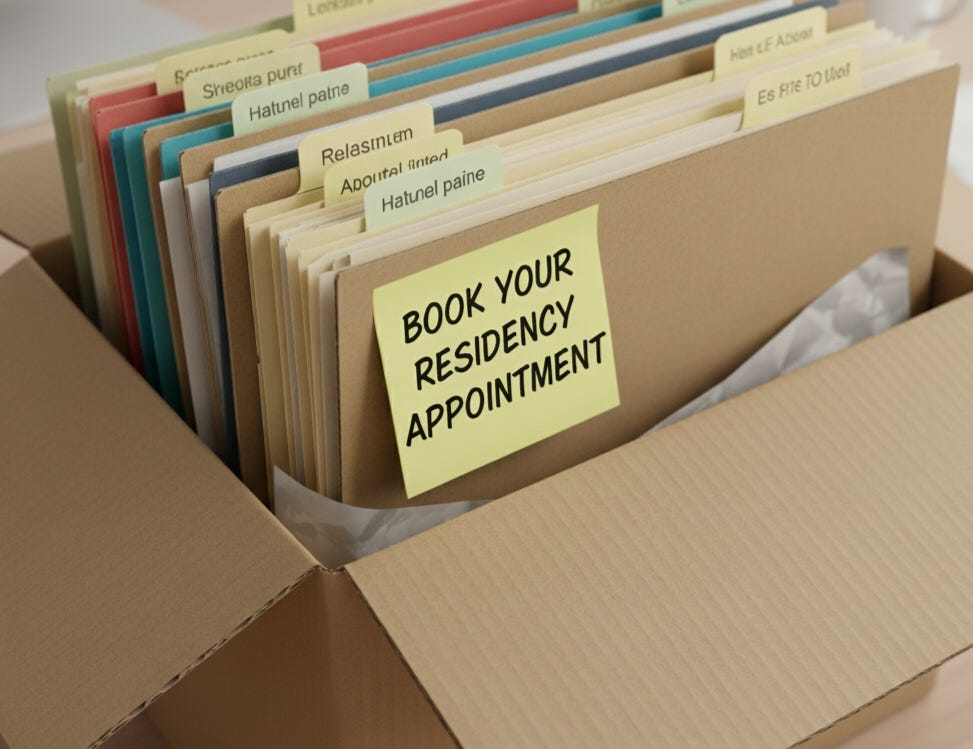
Book your residency appointment
This can be tricky, but it doesn’t have to be. Booking ahead of time is crucial. Sometimes there may not be many available appointments. The window of time for going from a tourist to becoming a legal immigrant may be narrow depending on your country’s rules.
This is the time to research online expert companies who will book your residency and fill out the paperwork for you. They will inform you of all the required documentation so you have enough time to get it all prepared.
As you can see there is a lot to do in the first 2 weeks and that isn’t all, you may be getting your home decorated, you may be buying new furniture and appliances.
Next week we’re going to unpack more that’ll help you settle in even further.
Until then, take a deep breath, enjoy the new journey ahead!
For any questions or tips on the above for those moving to Spain, feel free to:
Thanks for reading!
If you missed the preparation guide or know someone who is going to move countries here it is:
I resonate with what you wrote. The dust bunnies really do become your first roommates abroad, don't they? This piece is so insightful; what other language myths have you seen people struggle with?
Glad it resonates & thanks for reading & commenting 😃
Ooo language myths are funny, for example, to learn a foreign language you just need to do x method e.g. 'Just speak to locals' - this targets 2/4 key skills but reading & writing are also essential. And what about people who have language anxiety & may struggle to speak with natives or those who live where no one they know speaks the language they're learning? 😅
Then there’s 'If you learn a foreign language, you can easily learn another' - well that presumptuous... What if someone learnt Tagalog & now want to learn Finnish?... They're completely different.
Lastly, the myth of 'It's easier for kids to learn a foreign language' - this ignores individuality, what children are we talking about? What about those with learning difficulties or social anxiety? Language learning is complex, yes children have way more time on their hands (unless comparing to an adult full time couch potato), but just because they may learn some songs, a few words here & there at school it doesn't mean it's easier. How many children who are now adults are brilliant at languages just because they were kids at one point?
Thanks for asking! Do you learn any other language(s) or speak another?